If you have sourced PLC splitters for FTTH, PON or telecom projects before, you probably know that comparing suppliers is not as simple as putting twenty 1×8 prices into a spreadsheet.
At T&S, we work with distributors, telecom integrators, equipment manufacturers and customers developing their own passive optical product lines. We often receive inquiries for the same split ratio but very different finished products. One customer may need a bare 250 μm splitter for integration into a closure, another may want an ABS PLC splitter with SC/APC connectors, while another is looking for an LGX cassette or rack-mounted unit that can go directly into an ODF.
So when we talk about the best PLC splitter manufacturers, we do not mean there is one supplier that is automatically best for every project. Large telecom infrastructure groups, passive optical component specialists and factory-direct manufacturers solve different sourcing problems.
How we selected these manufacturers: We reviewed current PLC splitter product availability, published technical specifications, packaging options, PON/FTTx relevance and the types of B2B projects each supplier appears best suited to. This is not a ranking by revenue, company size or market share. The numbering is simply there to make the list easier to navigate.
Why PLC Splitter Demand Is Still Growing
PLC splitter technology itself is already mature. What continues to grow is the fiber infrastructure around it. The Fiber Broadband Association reported that the U.S. added a record 11.8 million FTTH home passings in 2025, bringing total FTTH passings to 98.3 million when multiple passings are included. Fiber now passes more than 60% of U.S. households.
Europe is moving in the same direction. FTTH Council Europe expects FTTH/B networks across the EU39 to reach around 353 million premises by 2031, with more than 251 million active fiber subscribers. Meanwhile, the active side of PON continues to evolve: Broadband Forum interoperability programs have already moved beyond XGS-PON into 25GS-PON and Higher-Speed PON, including 50G-PON testing.
From our perspective, this does not mean the passive splitter suddenly needs to change every time an operator upgrades the OLT. It does mean optical budget, splitter loss, wavelength coverage and ODN design continue to matter as networks are expected to support higher-capacity generations of PON. For a closer look at where an optical splitter sits between the OLT and end users, see our PON splitter deployment guide.
What B2B Buyers Need From a PLC Splitter Manufacturer
When customers compare a PLC splitter manufacturer, split ratio is usually only the starting point. A 1×16 bare fiber splitter and a 1×16 connectorized LGX module perform the same basic optical function, but they are different products to manufacture, package, test and install. The same applies when a distributor wants several fiber lengths, an OEM needs customized labeling, or a telecom project specifies G.657A2 and SC/APC across an entire product family.
For repeat-volume and OEM projects, we also think it is useful to understand how much of the PLC splitter manufacturing process the supplier actually handles. Comparing only the first quoted price can overlook differences in package capability, optical testing, component control and how easily a supplier can maintain the same configuration over repeat orders.
| What to Compare | Why It Matters |
| Split ratio | 1×2, 1×4, 1×8, 1×16, 1×32, 1×64 and 2×N suit different ODN designs |
| Insertion loss | Directly affects the available optical power budget |
| Uniformity | Shows how evenly loss is controlled across output channels |
| PDL | Important when comparing optical consistency |
| Return loss / directivity | Useful indicators of finished optical performance |
| Wavelength range | 1260–1650 nm is common among wideband PLC products |
| Fiber type | G.657 variants are widely used where bend performance matters |
| Package | Bare, mini, ABS, LGX/cassette or rack mount |
| Connector | SC/APC, SC/UPC, LC/APC, LC/UPC or unconnectorized |
| Reliability | GR-1209 and GR-1221 are commonly referenced |
| Customization | Fiber length, housing, labeling, connector and packaging |
| Production model | Catalog supply and OEM manufacturing require different support |
| Repeat orders | The agreed BOM and performance need to remain consistent |
This is also why PLC splitter price needs context. A bare 1×8 device without connectors should not be compared directly with a connectorized ABS module or LGX cassette simply because all three are described as a “1×8 PLC splitter.”
Top 20 PLC Splitter Manufacturers in 2026
| # | Manufacturer | Region | Where We See the Strongest Fit |
| 1 | Corning | USA / Global | Large telecom and integrated fiber infrastructure |
| 2 | CommScope | USA / Global | PON and access-network deployment |
| 3 | SENKO Advanced Components | USA / Global | Passive optical components and configurable PLC products |
| 4 | Prysmian | Italy / Global | Integrated FTTx infrastructure |
| 5 | AFL | USA | PLC components and OSP integration |
| 6 | Sumitomo Electric Optifrontier | Japan | Established passive optical manufacturing |
| 7 | Lightera | USA / Japan / Global | FTTx splitter and distribution systems |
| 8 | Fujikura | Japan | Telecom splitter modules |
| 9 | HUBER+SUHNER | Switzerland | High-density splitter cassette systems |
| 10 | Rosenberger | Germany / Global | Configurable telecom PLC products |
| 11 | R&M | Switzerland | ODF-integrated PON modules |
| 12 | Molex | USA / Global | Global connectivity and PLC components |
| 13 | Hexatronic | Sweden / Global | Pre-connected FTTx splitter modules |
| 14 | FIBRAIN | Poland | European passive optical manufacturing |
| 15 | Go!Foton | USA | Passive optics and fiber management |
| 16 | LIGHTEL | USA | Specialist passive optical components |
| 17 | AC Photonics | USA | PLC, WDM and custom photonics |
| 18 | OPTOKON | Czech Republic | FTTH systems and PON infrastructure |
| 19 | FOC GmbH | Germany | Specialized configurable PLC splitters |
| 20 | T&S Communications | China | Finished PLC splitters, components and customization |
1. Corning — United States
Website: https://www.corning.com/
Corning is one of the most established names in optical communications. Its QuickPath PLC splitter portfolio covers components, quick-connect cassettes, custom modules and rack-mount designs for FTTx, CATV, PON and telecommunications, and Corning states that the range is qualified to Telcordia GR-1209/1221. We see Corning as particularly strong where the splitter is specified as part of a wider fiber infrastructure platform rather than purchased as an isolated passive component.
2. CommScope — United States
Website: https://www.commscope.com/
CommScope has a broad fiber optic splitter portfolio across access-network applications. Current PLC products include different pigtail constructions, connectorized and unconnectorized versions, G.657.A2 fiber and wideband 1260–1650 nm operation. One current 1×32 SC/APC model, for example, specifies maximum PDL of 0.3 dB, minimum directivity of 55 dB and maximum insertion loss of 17.6 dB. We see CommScope as particularly relevant to telecom operators and FTTx integrators that need passive splitting to fit an established outside-plant architecture.
3. SENKO Advanced Components — United States / Global
Website: https://www.senko.com/
SENKO is widely known for fiber connectivity, but its passive portfolio also goes deep into PLC technology. Its 1×N range covers 1×2 through 1×64 and operates across 1260–1650 nm, with published maximum insertion-loss values ranging from 4 dB for 1×2 to 21 dB for 1×64. For OEM and equipment customers, we see SENKO as particularly relevant when splitter design, connectorization and passive-component engineering need to be considered together.
4. Prysmian — Italy / Global
Website: https://www.prysmian.com/
Prysmian offers PLC splitters with up to 64 outputs for passive optical networks, with multiple packaging and connector options. Its product documentation also shows splitters being supplied pre-installed inside other connectivity products and references Telcordia GR-1209 and GR-1221 requirements. We would place Prysmian firmly in the infrastructure-oriented category, especially where cable, connectivity and passive distribution are being sourced as part of a larger FTTx program.
5. AFL — United States
Website: https://www.aflglobal.com/
AFL's PLC range covers split counts from 1×4 through 2×32 across the 1260–1650 nm single-mode operating window. Input and output fibers can be supplied with or without connectors, and AFL states that its products are fully tested to Telcordia 1209 and 1221 criteria. We see AFL as a good fit where a PLC device is being purchased together with broader telecom, CATV or outside-plant connectivity.
6. Sumitomo Electric Optifrontier — Japan
Website: https://www.seof.co.jp/english/
Sumitomo Electric Optifrontier currently lists 1×4, 1×8, 1×16 and 1×32 PLC splitters for FTTH and CATV. Its published maximum insertion losses are 7.4, 11.0, 14.3 and 17.9 dB respectively, with return loss of at least 50 dB. We see Sumitomo as a useful reference for buyers that value established Japanese passive-optical manufacturing and clearly published technical specifications.
7. Lightera — United States / Japan / Global
Website: https://lightera.com/
Lightera's Direct Connect PLC Splitter range is built around FTTx deployment. It currently includes 1×8, 1×16 and 1×32 configurations, 1260–1650 nm operation and several connector combinations, while the housing and ruggedized fiber legs are designed for cabinet and closure installation. Lightera also states that the module meets GR-1221-CORE and GR-1209-CORE requirements, making it particularly relevant where outside-plant deployment and mechanical packaging are part of the sourcing decision.
8. Fujikura — Japan
Website: https://www.fujikura.co.jp/eng/
Fujikura approaches optical splitting from a telecom-system perspective. Its FSC110 series supports 1×2, 1×4, 1×8, 1×16 and 1×32 splitter modules for a 19-inch 3U rack system, with a modular design intended for high-density installation and easier replacement. For carriers already familiar with Fujikura fiber, splicing and distribution products, the wider telecom ecosystem is likely to be at least as important as the individual splitter specification.
9. HUBER+SUHNER — Switzerland
Website: https://www.hubersuhner.com/
HUBER+SUHNER integrates PLC splitters into its LISA high-density fiber-management platform. Current products include 1×32, 2×1:16, 2×1:8 and other PLC cassette arrangements with front access, patch-cord guidance, labeling and fiber-management functions. We see HUBER+SUHNER as particularly relevant to central-office and high-density distribution projects where access, routing and maintainability are part of the splitter decision.
10. Rosenberger — Germany / Global
Website: https://www.rosenberger.com/
Rosenberger's published PLC range covers 1×2 through 1×64, different fiber diameters, customized fiber lengths and fiber choices including G.652.D, G.657-A1 and G.657-A2. Its published maximum insertion-loss figures include below 10.5 dB for 1×8 and 17.0 dB for 1×32. We see Rosenberger as a strong option where splitter configuration needs to align with a wider telecom connectivity specification.
11. R&M — Switzerland
Website: https://www.rdm.com/
R&M integrates PLC splitting directly into its PRIME optical distribution platform. One current PRIME module arrives as a ready-to-use 1×16 PLC splitter using G.657.A2 fiber and LC/APC connectivity, while another supports a 2×32 configuration. We see this approach as especially relevant to operator and enterprise PON projects where the splitter, adapters and fiber management are expected to work as one ODF system.
12. Molex — United States / Global
Website: https://www.molex.com/
Molex offers a globally available PLC splitter platform covering 1×2 through 1×64. Its current specifications publish insertion loss, PDL and wavelength-dependent loss separately, with maximum insertion loss of 10.2 dB for 1×8, 13.5 dB for 1×16, 16.5 dB for 1×32 and 20.5 dB for 1×64. We think Molex is a useful technical reference because its published data makes it easy to see how optical specifications change as channel count increases.
13. Hexatronic — Sweden / Global
Website: https://www.hexatronic.com/
Hexatronic's PLC splitter modules are designed around Fiber Distribution Hubs and centralized splitter frames. The platform includes a wide selection of cassette-style configurations with SC/APC and LC/APC connectivity, while its technical documentation describes 1×N architectures extending to 1×64 and dual-input configurations to 2×32. We see Hexatronic as particularly relevant when fast field installation and integration with FTTx distribution hardware matter as much as the underlying optical component.
14. FIBRAIN — Poland
Website: https://fibrain.com/
FIBRAIN is one of the stronger European specialist manufacturers in this comparison. Its ABS/Minibox range includes 1×2 through 1×64 configurations using G.657.A2 fiber, with published maximum insertion loss of 10.0 dB for 1×8 and 16.5 dB for 1×32. FIBRAIN also explicitly states that connectorized PLC splitters add 0.4 dB to its listed insertion-loss values, which is a useful detail when buyers are comparing specifications across suppliers.
15. Go!Foton — United States
Website: https://www.gofoton.com/
Go!Foton's current PLC platform covers common and intermediate split counts including 1×4, 1×8, 1×12, 1×16, 1×24, 1×32 and 1×64. Its product documentation also shows PLC splitters configured in enclosures and LGX formats, making the company relevant where passive optical components need to fit into a larger fiber-management environment rather than remain as loose assemblies.
16. LIGHTEL — United States
Website: https://www.lightel.com/
LIGHTEL's PLC Wideband Splitter family covers 1×4, 1×8, 1×16 and 1×32 across 1260–1650 nm. The same product family can be configured as pigtailed components, LGX boxes or 1RU rack-mounted systems, with several connector options. We see LIGHTEL as a useful specialist source for customers that need several mechanical formats but want to keep the underlying splitter specification reasonably consistent.
17. AC Photonics — United States
Website: https://acphotonics.com/
AC Photonics offers 1×N and 2×N PLC splitters extending to 64 outputs, with module and rack packaging. Its current published specifications include maximum insertion loss of 10.8 dB for 1×8, 13.8 dB for 1×16 and 17.2 dB for 1×32, while the company states that the platform is qualified under Telcordia GR-1221 and GR-1209. We see AC Photonics as relevant for OEM and passive-component projects that may extend beyond a standard FTTH splitter configuration.
18. OPTOKON — Czech Republic
Website: https://www.optokon.com/
OPTOKON includes PLC splitters within a broader FTTH and PON infrastructure platform. Its SFT-P product documentation covers 1×2 through 1×64, while its wider OPTOKONcept material shows splitter integration into cabinets and termination systems. We see OPTOKON as more of a system-oriented supplier than a component-only PLC splitter factory, which can be useful when an integrator needs more of the passive FTTH infrastructure from one supplier.
19. FOC — fibre optical components GmbH — Germany
Website: https://www.foc-fo.de/
FOC is a German passive-optics specialist offering PLC splitters in different formats and architectures, including 1×N, 2×N and M×N. Its ABS Box product supports a broad 1260–1650 nm wavelength range, several single-mode fiber options and applications including PON, FTTx, MAN, LAN and CATV. FOC's published ABS specification extends as far as 1×128 and 2×128, making it worth considering for more specialized European requirements.
20. T&S Communications — China
Website: https://www.china-tscom.com/
At T&S, our PLC splitter business sits closer to the manufacturing and customization side of the product. Our PLC splitter portfolio covers different finished configurations for PON, FTTH and optical distribution projects, while our broader passive optical platform also allows us to work with customers whose requirements move beyond a standard catalog splitter.
For distributors and OEM customers, that usually becomes important when several variables need to be managed under the same project: split ratio, fiber type, connector, lead length, package, labeling and expected repeat volume. We prefer to understand those requirements around the actual application rather than assume every 1×8 or 1×32 inquiry is the same finished product.
How to Choose the Right PLC Splitter Type
After comparing the manufacturers above, one thing becomes clear: a PLC splitter is not one physical product. The planar waveguide performs the basic optical splitting function, but the package around it determines where the product can be installed, how much protection it has and how technicians will handle it later.
| PLC Splitter Type | Typical Application | What Buyers Usually Care About |
| Bare Fiber | Splice trays, closures, OEM integration | Small size, fiber diameter and lead length |
| Mini | Compact distribution boxes | Protection, dimensions and connector options |
| ABS Module | FTTH/PON distribution equipment | Cable protection and field handling |
| LGX / Cassette | Modular ODF and distribution systems | Installation, labeling and adapter type |
| Rack Mount | Central office / centralized splitting | Density, access and cable management
|
A mini splitter therefore should not automatically be compared with an ABS PLC splitter or an LGX product purely by unit price. The correct package depends on how the splitter will actually be installed. The network architecture matters as well: centralized and cascaded splitting can place different requirements on location, fiber routing and enclosure design, which we discuss further in our PLC splitter deployment guide.
How to Read PLC Splitter Insertion Loss
Insertion loss is one of the first specifications buyers compare, particularly around PLC splitter 1×8, 1×16 and PLC splitter 1×32 products because every passive component becomes part of the network's optical loss budget.
A useful reference based on published specifications from several manufacturers looks roughly like this:
| Split Ratio | Common Published Max IL Range* |
| 1×2 | ~3.5–4.0 dB |
| 1×4 | ~6.9–7.5 dB |
| 1×8 | ~10.0–11.0 dB |
| 1×16 | ~13.3–14.3 dB |
| 1×32 | ~16.5–17.9 dB |
| 1×64 | ~20.0–21.0 dB |
Reference range only. It is not a universal acceptance standard because product grade, connectorization, package and test conditions vary.
For example, Molex publishes maximum insertion loss of 10.2 dB for 1×8 and 16.5 dB for 1×32, while Sumitomo Electric Optifrontier publishes 11.0 and 17.9 dB respectively. FIBRAIN publishes 10.0 and 16.5 dB before connectors and explicitly adds 0.4 dB for connectorized PLC splitters. AC Photonics similarly notes that its listed insertion-loss values exclude connectors.
So if one quotation shows a slightly lower insertion-loss figure than another, our first question would be whether both numbers describe the same finished configuration. Connector loss, uniformity, PDL, return loss and wavelength range should be reviewed together rather than treating one IL number as the entire product specification.
PLC vs FBT Splitter: Which One Fits the Network?
Another comparison we regularly see is FBT vs PLC splitter. Because we work with both technologies, we do not think the answer should simply be “PLC is better.”
PLC technology is usually the more natural fit for higher split counts, wide wavelength operation and relatively uniform power distribution, which is why it is widely used as a PON splitter in FTTH and FTTx networks. An FBT coupler remains useful where the project calls for lower channel counts or unequal optical distribution, such as 90/10 or 80/20 ratios.
The network requirement should decide which technology makes more sense. For buyers comparing both approaches, our PLC splitter vs FBT splitter comparison looks more closely at their structure, wavelength range, splitting characteristics and typical applications.
PLC Splitter Manufacturer FAQs
Who are some of the leading PLC splitter manufacturers?
The market includes large optical-infrastructure companies such as Corning, CommScope, Prysmian, AFL and Fujikura; passive-component specialists such as SENKO, LIGHTEL, AC Photonics and FOC; and manufacturers such as T&S that work with finished PLC splitter assemblies and customized B2B requirements. The right supplier depends more on the project and sourcing model than on company size alone.
What should I check when choosing a PLC splitter manufacturer?
Start with the optical specification and finished configuration rather than price alone. Split ratio, insertion loss, uniformity, PDL, fiber type, connector, package and wavelength range should all be confirmed. For repeat OEM or distribution orders, customization, testing, BOM control and repeat-production consistency also become important.
What is the typical insertion loss of a 1×8 PLC splitter?
Published maximum insertion-loss specifications for 1×8 PLC splitters commonly fall around 10–11 dB, although the exact figure depends on product grade and whether connector loss is included. Current published examples include 10.0 dB from FIBRAIN, 10.2 dB from Molex, 10.7 dB from SENKO and 11.0 dB from Sumitomo Electric Optifrontier.
What is the difference between a PLC splitter supplier and manufacturer?
A supplier may distribute products produced elsewhere, while a manufacturer is directly involved in one or more production or assembly stages. For B2B buyers, the practical question is which processes the company actually controls and whether those capabilities match the project. An OEM that needs several custom configurations, for example, may evaluate a supplier differently from a contractor purchasing standard stock products.
Can PLC splitters be customized for OEM projects?
Yes. Common project variables include split ratio, fiber type, fiber or cable length, SC or LC interfaces, UPC or APC polishing, bare/mini/ABS/LGX packaging, labeling and outer packaging. The available combinations differ by manufacturer, so they are best confirmed before sample qualification.
How We Approach PLC Splitter Projects
When customers come to us looking for a PLC splitter supplier or manufacturer, we normally start with the actual finished configuration: split ratio, package, fiber type, connector, lead length, optical requirements and quantity.
For example, a requirement such as “1×16 PLC splitter, ABS module, G.657A2, SC/APC, 2.0 mm cable, 1.5 m leads, 500 pcs” already gives us a useful starting point. For distributors and OEM projects, we can then work through labeling, packaging, drawings, enclosure requirements or repeat-order needs without making the initial RFQ unnecessarily complicated.
Our PLC splitter portfolio covers finished splitter products, while our PLC splitter wafer and chip range gives customers another option when the requirement moves further upstream toward component-level integration. Buyers who want to understand what happens between the planar waveguide and the finished assembly can also review our PLC splitter manufacturing process.
If you are comparing PLC splitter manufacturers for an FTTH, PON, distribution or OEM project, send us your current specification, drawing or product list. We can review the configuration with you before moving into samples or repeat production.
 EN
 jp
 fr
 es
 it
 ru
 pt
 ar
 el
 nl

 Fiber Optic Flex Circuit (FOFC)
Advanced Simulation & Optimization, High Positioning Accuracy, Flexible Customization, Rigorous Reliability Testing
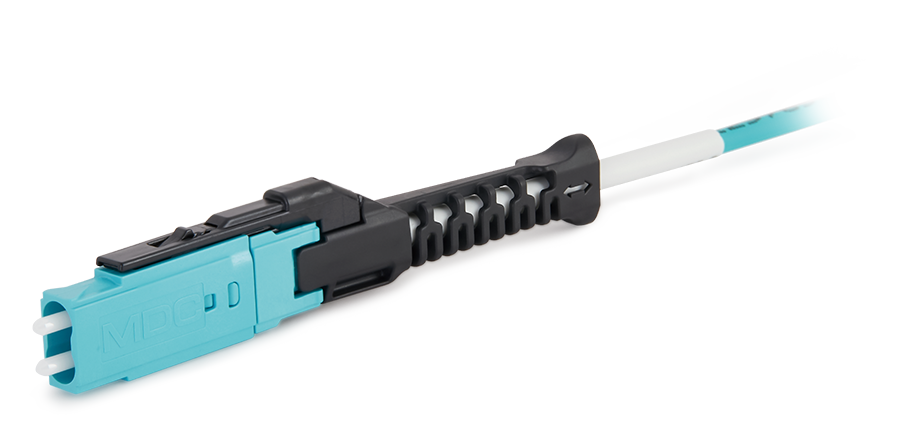 MDC Solution
US Conec's MDC connector is a Very Small Form Factor (VSFF) duplex optical connector, expertly designed for terminating single-mode and multimode fiber cables with diameters up to 2.0mm.
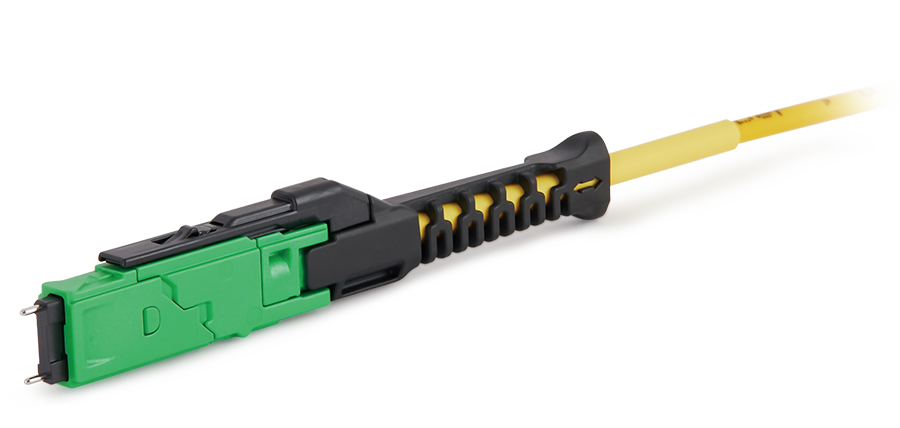 MMC Solution
Explore MMC cable and connector solutions for high-speed data centers, AI and HPC, including custom assemblies for 400G/800G network applications.