When sourcing fiber optic patch cords, most buyers begin with connector type, fiber mode, cable length, jacket material and insertion loss. Bend radius is often considered later, usually when the cable reaches the installation site. That approach may be acceptable for conventional telecom or enterprise networks with generous routing space, but it becomes increasingly risky in high-density data centers, compact equipment, FTTH deployments and customized pre-terminated fiber systems.

For distributors, OEMs, network integrators and project procurement teams, bend radius is not simply an installation rule. It can affect fiber selection, cable diameter, connector design, rack density, optical performance and even whether the finished cable assembly is suitable for the customer's application. A standard LC patch cord installed in an open rack may face very different mechanical conditions from a 1.6 mm high-density assembly routed behind a compact patch panel, even if both use single-mode fiber.
This means buyers should not ask only, “What is the minimum bend radius of this optical fiber?” A more useful sourcing question is whether the fiber type, cable construction and connector configuration will remain reliable within the actual routing environment. When evaluating a fiber optic patch cord manufacturer, the finished assembly should therefore be considered as a complete system rather than as a connector attached to a piece of fiber.
For B2B buyers, getting this decision right at the RFQ stage can reduce installation problems, replacement orders and project delays later.
Why Bend Radius Matters to Fiber Optic Patch Cord Buyers
Optical fiber can bend, but it cannot be bent without limits. When the bend becomes too tight, part of the light travelling through the fiber may escape from the guided path, increasing attenuation. More severe mechanical stress can also contribute to microbending, fiber damage or long-term reliability problems. This is one reason minimum bend radius is specified for both fiber and finished cable assemblies.
From a procurement perspective, however, the optical principle is only the beginning. The real commercial risk appears when an unsuitable patch cord reaches a project site. A cable may meet the connector and insertion-loss specification at the factory yet still be difficult to route through a crowded cabinet. An installer may be forced to make a tighter turn than the cable allows, or a distributor may later discover that a customer's enclosure has far less space behind the ports than expected. In those cases, a small specification oversight can create field rework, urgent replacement freight and customer complaints.
This is especially important for B2B buyers managing large quantities. A routing problem on one cable is manageable. The same problem repeated across hundreds or thousands of patch cords can affect installation time, project acceptance and total sourcing cost. For this reason, experienced buyers increasingly evaluate bend performance together with fiber grade, cable OD, connector type, boot geometry and installation conditions.
When comparing quotations from different fiber optic patch cord suppliers, the lowest unit price should therefore not be the only consideration. A cable that saves a few cents at the purchasing stage may create far greater cost if it does not fit the routing environment or requires replacement after installation.
G.652D vs G.657: Which Fiber Fits the Project?
For single-mode fiber optic patch cord sourcing, one of the first decisions is whether the project needs conventional G.652D fiber or one of the bend-insensitive G.657 grades.
G.652D remains widely used in telecom, enterprise and general optical networks where routing space is sufficient. G.657 fiber was developed to improve bending performance and is increasingly useful in FTTH, compact indoor installations, dense patching environments and equipment where cable-routing space is limited.
Typical bend-radius values commonly referenced for these fiber types are:
| Fiber Type | Typical Minimum Bend Radius | Typical Application | B2B Purchasing Consideration |
| G.652D | 30 mm | Conventional telecom and enterprise networks | Suitable where cable routing space is sufficient |
| G.657A1 | 10 mm | FTTx, data centers and compact patching | Good balance between compatibility and bend performance |
| G.657A2 | 7.5 mm | High-density panels and restricted routing | Useful where tighter cable management is required |
| G.657B3 | 5 mm | FTTH and very tight indoor routing | Best reserved for applications that genuinely require very small bends |
The important point for a B2B buyer is that the smallest bend radius is not automatically the best specification. Purchasing G.657B3 for every project simply because it offers tighter bending capability does not necessarily create additional value. If the customer's routing environment can comfortably accommodate G.657A1, that may already satisfy the application.
The correct selection should start with the installation environment. Buyers should understand how much clearance exists behind the patch panel, how tightly the cable must turn after leaving the connector, whether cables will be bundled, whether the assembly will remain static and whether the network design requires a specific fiber standard.
This also means that a bend-insensitive fiber optic patch cord should not be viewed as one standardized product. Two G.657A1 patch cords can still differ significantly in cable OD, jacket material, connector combination, boot design, length and mechanical construction. For distributors and OEMs, specifying the fiber grade without defining the finished assembly may still leave important sourcing variables unresolved.
High-Density Data Centers Are Changing Patch Cord Requirements
Data center environments provide one of the clearest examples of why bend radius is becoming more important to B2B procurement. As network speeds and port density increase, more fiber connections must be routed through the same rack space. The challenge is no longer only to connect point A to point B. Buyers also need to consider whether dozens or hundreds of cables can be routed, maintained and replaced without creating excessive bending or blocking access to neighboring ports.

A conventional LC patch cord may work perfectly well in many rack environments. However, as cable counts increase, cable outside diameter becomes increasingly important. A rack containing a large number of 1.6 mm patch cords behaves very differently from one filled with 3.0 mm cables. The total cable bundle becomes smaller, cable managers become easier to use and routing around dense port areas becomes more manageable.
The same principle applies to SC patch cord installations, although SC connectors are generally associated with lower-density environments than newer VSFF designs. For distributors supporting multiple customer segments, this means patch cord inventory increasingly needs to reflect application differences rather than relying on a single universal cable construction.
High-density networks are also driving greater use of smaller-form-factor connectors and multi-fiber systems. The same bend-radius issue can therefore extend beyond duplex patch cords to MPO patch cord and MPO trunk cable deployments. In higher fiber-count assemblies, routing geometry, cable diameter and bend control become even more important because a single cable may carry multiple fibers and serve a larger number of optical channels.
For a data center integrator, the relevant sourcing question is therefore not simply whether a supplier can manufacture an LC, SN, CS or MPO assembly. The more useful question is whether the proposed cable construction can support the physical routing density of the project.
This is one reason buyers increasingly expect a fiber optic patch cord supplier to understand application requirements rather than simply provide a catalog part number.
Cable Diameter and Fiber Type Need to Be Evaluated Together
Fiber grade receives most of the attention in bend-radius discussions, but cable OD can be just as important to the finished installation. The optical fiber sits inside a complete cable structure that may include buffering, strength members and jacket materials. The installation therefore interacts with the finished cable, not with bare fiber.
Consider two assemblies using the same G.657A1 fiber. One uses a 3.0 mm cable while the other uses a 1.6 mm cable. The underlying fiber may have similar bending characteristics, but the finished assemblies will occupy very different amounts of space inside a cable manager or high-density panel.
Smaller cable diameters can improve routing flexibility and allow more connections to be managed in limited rack space. However, smaller is not always better. Mechanical strength, jacket requirements, handling conditions and connector termination still need to match the application. An outdoor or industrial environment may place different demands on cable construction than an indoor data center patching system.
For this reason, an OEM fiber optic patch cord should not be specified by connector and fiber type alone. OEM buyers should ideally provide information about equipment space, cable exit direction, expected movement, environmental requirements and the maximum allowable cable diameter. A capable manufacturer can then determine whether an existing standard construction is suitable or whether a customized solution is required.
This is where the difference between a catalog product and a custom fiber optic patch cord becomes important. For customized projects, fiber type, cable OD, connector, boot, jacket, length and labeling can all become part of one controlled BOM.
The stronger the communication at the RFQ stage, the lower the probability of discovering a mechanical mismatch after the cables have already been manufactured.
Pre-Terminated Fiber Optic Cable Assemblies Need Earlier Bend-Radius Planning
Bend radius becomes even more important in pre terminated fiber optic cable assemblies because much of the work that would traditionally happen in the field has already been completed at the factory. Cable length, connectorization, breakout structure, polarity, labeling and sometimes pulling accessories may all be defined before the assembly reaches the installation site.
That creates benefits for installation efficiency, but it also places more responsibility on the original specification.
If a standard patch cord is slightly too long, an installer may have some flexibility to manage the excess cable. With a long pre-terminated assembly routed through several cabinets, pathways or equipment areas, an incorrect assumption about bend transitions can create a much larger problem.
For project buyers, the manufacturer therefore needs more than connector information. The fiber optic cable assembly supplier should understand approximate routing conditions, required lengths, fiber counts, breakout points, pulling method and installation space. For complex deployments, drawings or routing references can provide valuable information before production begins.
This is particularly relevant for OEMs and system integrators. A pre-terminated cable may need to follow a fixed path inside a piece of equipment or enter a cabinet through a specific opening. If the design forces an immediate tight turn after the connector or breakout, the assembly structure needs to accommodate that condition from the beginning.
The same principle applies to MPO/MTP assemblies used in high-density networks. An MPO trunk or harness cable may carry significantly more fibers than a conventional duplex jumper. As fiber count increases, the consequences of an unsuitable routing path also become greater.
For B2B buyers, pre-terminated connectivity should therefore be treated as an engineered assembly rather than another commodity SKU.
Static and Dynamic Bend Radius Are Not the Same Requirement
Another important distinction is the difference between static and dynamic bend radius.
Static bend radius refers to the condition after the cable has been installed and remains in its final position. Dynamic bend radius applies while the cable is being pulled, moved or otherwise subjected to mechanical force during installation.
A general cable-management guideline may use approximately 10 times the cable outside diameter for static conditions and a larger radius, such as 20 times the cable OD, while the cable is under tension. However, the actual manufacturer's specification for the finished cable should always take priority.
For example, a 3 mm cable following a 10×OD guideline would require approximately a 30 mm static radius. During installation, the cable may need substantially more space while being pulled through a pathway or repositioned around equipment.
This distinction matters particularly for longer pre terminated fiber optic cable assemblies, where installation forces can be much greater than those experienced by a short rack-level patch cord. A cable may easily satisfy its final static routing requirement but still be damaged if it is pulled around an aggressive corner during installation.
For distributors selling standard short patch cords, static and dynamic requirements may rarely become part of the sales discussion. For project contractors, OEM customers and data center integrators, however, installation conditions can be important enough to include during supplier qualification.
This is one reason a professional patch cord manufacturer should be able to explain the mechanical limits of the finished cable rather than provide only fiber specifications.
What Happens When the Wrong Patch Cord Is Specified?
The direct technical consequence of excessive bending is usually additional optical attenuation, but the commercial impact can extend much further.
A cable may still look physically normal even when its routing is creating additional optical loss. This can make bend-related problems difficult to diagnose because the installer may initially check connector cleanliness, polarity, transceiver condition or other components before identifying the cable route as the source of the problem.
For distributors, the result can be replacement claims, urgent freight and additional technical support. For project contractors, it can mean installation delays and repeated testing. For OEMs, an unsuitable assembly can be even more disruptive because a cable may already have been incorporated into an equipment BOM or qualification process.
These risks help explain why B2B patch cord sourcing should consider total project suitability rather than only purchase price.
Suppose one patch cord supplier offers a standard 3.0 mm cable at a slightly lower price, while another can provide a 1.6 mm bend-insensitive construction that better matches the customer's high-density rack. The lower-priced product may appear attractive on the quotation, but if it creates difficult cable management or requires replacement, the apparent saving quickly disappears.
The same logic applies to customized orders. A supplier capable of combining different lengths, fiber types or connector configurations under one project can sometimes create more value than a lower-priced source that requires buyers to manage several different suppliers.
For distributors and network solution providers, the useful metric is therefore not simply unit price. It is total sourcing efficiency: how easily the required assemblies can be specified, sampled, produced, delivered and repeated without creating downstream problems.
What B2B Buyers Should Include in a Fiber Patch Cord RFQ
A good RFQ does not need to be complicated, but it should remove the variables most likely to create misunderstanding. Instead of sending “Please quote LC patch cord, best price,” buyers should provide enough information for the optical fiber patch cord supplier to understand what is actually required.
For standard inventory products, connector type, fiber type, length and quantity may be sufficient. For OEM, distributor or project-specific orders, more detail can significantly improve quotation accuracy.
| RFQ Requirement | Information to Confirm | Why It Matters |
| Application | Data center, telecom, FTTH, OEM equipment, enterprise | Helps determine routing and mechanical requirements |
| Connector configuration | LC, SC, SN, CS, MDC, MPO/MTP, etc. | Defines interface and port-density requirements |
| Fiber type | G.652D, G.657A1, A2, B3, OM3, OM4, etc. | Determines optical and bending characteristics |
| Cable OD | 1.6 mm, 2.0 mm, 3.0 mm or project-specific | Affects cable density and routing flexibility |
| Cable length | Standard or customized | Influences routing and inventory planning |
| Jacket | LSZH, OFNR, OFNP or other | Depends on installation and compliance requirements |
| Bend/routing condition | Standard, compact, repeated turns, restricted space | Helps identify suitable cable construction |
| Optical requirement | Required insertion loss and return loss | Defines inspection and acceptance criteria |
| Labeling | Standard, customer label or project-specific | Important for OEM and distribution programs |
| Packaging | Neutral, private label or customized | Relevant to distributors and brand owners |
| Quantity | Per SKU and total project volume | Influences MOQ, production planning and pricing |
| Order structure | Single SKU or mixed configurations | Important for manufacturing flexibility |
This information does more than improve pricing accuracy. It also gives the manufacturer an opportunity to identify conflicting requirements before production. If the requested cable diameter, bend radius and connector design do not work well together, an experienced supplier should raise the issue rather than simply manufacture exactly what appears on the RFQ.
That interaction can itself be part of supplier evaluation.
A strong fiber patch cord supplier should be able to ask meaningful technical questions when necessary, while still handling simple standard orders efficiently.
Quality Testing Still Matters After the Right Fiber Is Selected
Choosing G.657 fiber or a smaller cable diameter does not automatically make a high-quality patch cord. Bend performance is only one part of the finished assembly. Connector end-face quality, polishing geometry, insertion loss, return loss, mechanical durability and environmental performance can all influence field reliability.
For this reason, buyers evaluating a fiber optic patch cord manufacturer should ask how finished assemblies are tested rather than relying only on raw material specifications.
Optical testing should confirm insertion loss and return loss. Connector inspection should verify that contamination or end-face defects are not introduced during production. For certain projects, mechanical and environmental testing may also be relevant, especially when the cables will be handled repeatedly or installed in more demanding conditions.
B2B customers should also think beyond the first sample.
A supplier may produce an excellent prototype, but distributors and OEMs need repeat-order consistency. The more important long-term questions are whether the same fiber, cable structure, connector components and process controls can be maintained when the order moves from samples to volume production.
This is where fiber patch cord quality testing becomes part of sourcing strategy rather than only factory QC.
For a distributor managing dozens of SKUs, inconsistent performance can generate downstream warranty work. For an OEM, changes in cable construction may require new validation. Repeatability therefore matters almost as much as the performance of the first approved sample.
How to Evaluate a Fiber Optic Patch Cord Manufacturer
A supplier discussion should not begin and end with a price list. For B2B customers, the more useful question is whether the manufacturer's capabilities match the expected product mix and the types of projects the buyer intends to support.

A telecom distributor may currently sell mainly LC and SC assemblies but increasingly receive requests for bend-insensitive G.657 cables, smaller cable diameters or higher-density connectivity. A data center integrator may require conventional duplex patching alongside MPO/MTP, breakout and VSFF assemblies. An OEM may start with a standard product but later need custom cable length, private labeling or a modified boot.
Before qualifying a long-term fiber optic patch cord supplier, buyers should understand whether the manufacturer can support this type of evolution.
Useful questions include:
Which fiber grades and cable diameters are available?
Can standard LC patch cord and SC patch cord orders be produced at scale?
Can the factory support customized lengths and mixed configurations?
Are G.657A1, G.657A2 or other bend-insensitive fibers available?
Can the supplier manufacture MPO patch cord and other high-density assemblies?
What are the sample-development capabilities for custom products?
How are insertion loss, return loss and connector end faces inspected?
Can the manufacturer maintain the same BOM across repeat production?
How are labeling and customized packaging controlled?
Can several SKUs be combined under one project or purchase order?
These questions help buyers distinguish between a company that can supply a single catalog item and a fiber optic cable assembly supplier that can support broader project requirements.
That distinction becomes increasingly valuable as product portfolios expand.
For many distributors and OEMs, the ideal supplier is not necessarily the company with the largest catalog or the lowest price. It is the manufacturer that can reliably produce today's standard products while reducing the effort required when tomorrow's customer asks for a different configuration.
Bend Radius Should Be Part of the Sourcing Decision
Minimum bend radius begins as an optical and mechanical specification, but for B2B buyers it eventually becomes a purchasing decision.
G.652D may remain the correct option for conventional networks with adequate routing space. G.657A1 or G.657A2 can provide greater routing flexibility in FTTH, data center and compact equipment environments, while G.657B3 may be valuable where very tight bends are genuinely unavoidable. The correct choice depends on the installation, cable OD, connector structure and project requirements rather than on one number in a fiber specification.
The same principle applies to the finished fiber optic patch cord. A connector may be standardized, but the assembly around it can vary considerably. Length, fiber grade, cable diameter, jacket, boot, labeling, packaging and routing conditions can all influence whether a cable fits the project.
For distributors, OEMs, telecom contractors and data center integrators, sharing these details with a fiber optic patch cord manufacturer before ordering can reduce specification gaps and make quotations more meaningful.
A few additional questions during RFQ review may prevent much larger problems during installation.
In that sense, bend radius is not simply about how tightly an optical fiber can turn. It is about selecting a cable assembly—and a manufacturing partner—that fits the application from the beginning.
Looking for the Right Fiber Connectivity Solution?
Choosing the right fiber optic patch cord is not only about connector type, fiber grade or minimum bend radius. For distributors, OEMs, data center integrators and telecom projects, the real goal is to build a connectivity solution that performs reliably from specification and production through installation and long-term operation.
At T&S, we connect people with people by connecting things with things, helping enable seamless communication and efficient network operations. We provide fiber optic connectivity products and services to customers worldwide, covering standard and customized patch cords, high-density fiber assemblies and other optical connectivity solutions.
What sets T&S apart is our expertise in key production technologies combined with a comprehensive understanding of fiber optic connectivity products. These capabilities are particularly important as networks move toward higher-density connections and higher-speed data transmission, where component precision, cable construction, optical performance and manufacturing consistency increasingly need to work together.
By bringing these technologies and capabilities under one roof, T&S can support customers from standard product sourcing to customized connectivity requirements.Explore our fiber optic patch cord solutions or contact T&S to discuss your requirements with an experienced fiber optic patch cord manufacturer.
 EN
 jp
 fr
 es
 it
 ru
 pt
 ar
 el
 nl

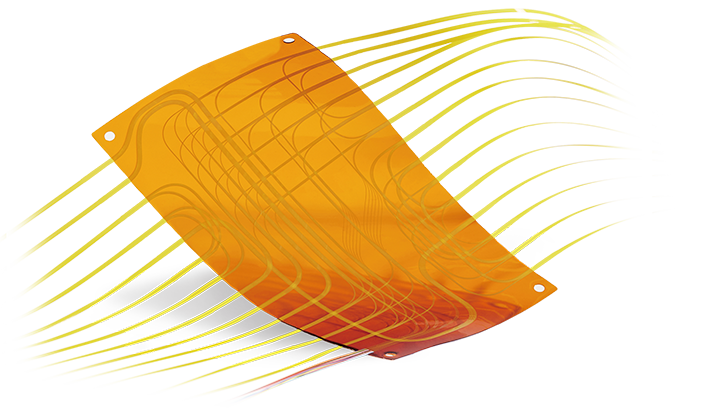 Fiber Optic Flex Circuit (FOFC)
Advanced Simulation & Optimization, High Positioning Accuracy, Flexible Customization, Rigorous Reliability Testing
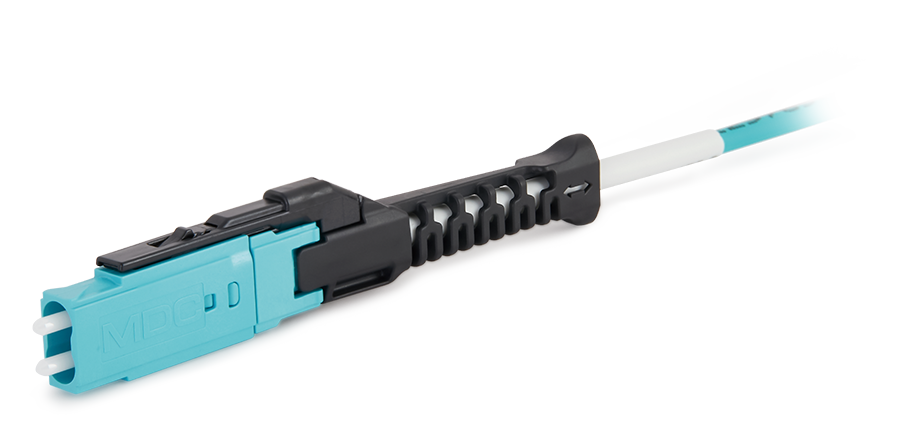 MDC Solution
US Conec's MDC connector is a Very Small Form Factor (VSFF) duplex optical connector, expertly designed for terminating single-mode and multimode fiber cables with diameters up to 2.0mm.
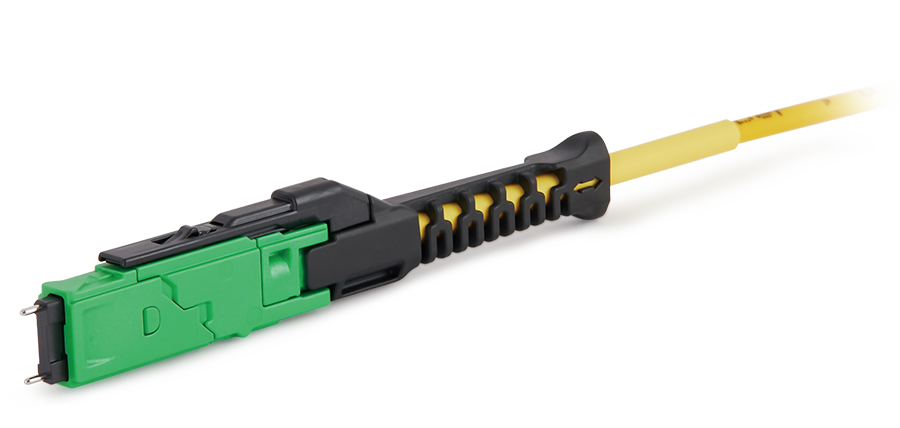 MMC Solution
Explore MMC cable and connector solutions for high-speed data centers, AI and HPC, including custom assemblies for 400G/800G network applications.