Active Optical Cables (AOCs)
combine optical fiber and active optical components into a
factory-terminated cable assembly. They provide an integrated way to
connect compatible high-speed network equipment while reducing some of
the cable bulk and electromagnetic constraints associated with
copper-based connections.
As data-center architectures move from 400G and 800G toward
higher-speed interconnects, selecting an AOC requires more than matching
a headline data rate. Interface type, link architecture, breakout
configuration, reach, power consumption, operating environment and
system compatibility all need to be considered together.
This guide explains how AOCs work, how they compare with DACs and
modular optical-transceiver solutions, and what engineers and B2B
procurement teams should check when selecting an AOC.
What Is an AOC Cable?
An Active Optical Cable (AOC) is a factory-terminated fiber-optic
cable assembly with active optical components integrated into both
ends.
The active components convert electrical signals into optical signals
at the transmitting end and convert the received optical signals back
into electrical signals at the receiving end. Because these active
components are integrated into the cable ends, an AOC requires
electrical power from the connected host equipment.
Unlike a conventional passive fiber cable used with separate optical
transceivers, an AOC combines the optical transmission path and active
conversion functions into one assembled link. This integrated
architecture can simplify installation and reduce the number of
separately managed components.
For an overview of AOC fundamentals, see T&S's AOCtechnology guide.
How Does an AOC Cable Work?
An AOC performs electrical-to-optical and optical-to-electrical
conversion within the cable assembly.
The basic signal path is:
Electrical Signal → E/O Conversion → Optical Fiber → O/E Conversion →
Electrical Signal

At the transmitting end, active electronics and optical components
convert the electrical input into an optical signal. The signal travels
through the fiber to the opposite end, where it is converted back into
an electrical signal for the receiving equipment.
Because the conversion components are integrated into both ends of
the cable, an AOC is supplied as a complete connection rather than as
separate transceivers and fiber patch cables.
This architecture can simplify deployment, but it also means that the
cable assembly should be specified around the exact interfaces and
requirements of the connected equipment.
Why Are AOC Cables Used in Data Centers?
AOCs are used in data centers and other high-speed network
environments where optical transmission, cable density and integrated
connectivity are important considerations.

Compared with copper-based direct-attach cables, optical AOCs can
provide several practical advantages:
High-speed optical transmission: Suitable for a
wide range of high-speed interconnects, including 400G and 800G
applications.
Lower cable bulk: Fiber-based construction can
reduce cable size and weight compared with equivalent high-speed copper
assemblies.
Lower susceptibility to EMI: Optical
transmission is inherently less susceptible to electromagnetic
interference than electrical transmission over copper.
High-density deployment: Smaller and lighter
cable assemblies can help simplify cable management in dense equipment
environments.
Integrated connectivity: Active optical
components and the fiber path are supplied as one factory-terminated
assembly.
These characteristics make AOCs suitable for direct connections
between servers, switches, accelerators and other compatible network
equipment.
AOC should not, however, be treated as a universal replacement for
DAC or modular optical-transceiver solutions. The appropriate
architecture depends on the specific link requirements.
AOC Cable vs. DAC Cable: What Is the Difference?
AOC and DAC are both direct-attach cable assemblies, but they use
different transmission technologies. AOC uses optical fiber with active
optical conversion, while DAC carries electrical signals directly over
copper conductors.
Comparison Factor | AOC | DAC |
Transmission medium | Optical fiber | Copper |
Signal transmission | Optical, with active E/O and O/E conversion | Electrical |
EMI susceptibility | Low | More susceptible to electromagnetic interference |
Cable size and weight | Generally lower for high-speed links | Generally higher as speed and reach increase |
High-density deployment | Well suited to dense optical interconnection | More constrained by cable bulk and bend requirements |
Active components | Integrated at both ends | No optical conversion |
Typical use | High-speed direct optical links | Short, direct copper connections |
The choice between AOC and DAC should be based on the complete link
requirement rather than cable price alone. Data rate, reach, cable
density, power consumption, equipment interfaces and long-term network
architecture can all affect the appropriate choice.

AOC Cable vs. Optical Transceiver + Cable: Which Architecture Fits Better?
An AOC is an integrated optical cable assembly, while a conventional
optical architecture uses separate optical transceivers and fiber-optic
patch cords.
Factor | AOC Cable | Optical Transceiver + Fiber |
Structure | Integrated assembly | Separate components |
Installation | Factory-terminated, plug-and-play connection | Transceivers and fiber installed separately |
Configuration flexibility | More limited | Higher |
Maintenance | Complete AOC assembly typically replaced if an integrated active component fails | Transceiver and fiber can be replaced independently |
Component selection | Integrated | Components can be selected separately |
Typical application | Standardized direct high-speed links | Networks requiring greater modularity |
The main trade-off is therefore integration versus flexibility.
An AOC can simplify installation and reduce the number of separately
managed components. A modular transceiver architecture provides greater
flexibility when link length, connector type, transceiver generation or
cabling configuration may change over time.
How Should You Choose an AOC Cable Specification?
AOC selection should start with the complete link architecture rather
than with cable speed alone.
1. Confirm the Required Data Rate
First identify the required network speed, such as 10G, 25G, 100G,
200G, 400G or 800G.
Higher-speed links can involve different electrical lane
architectures and host interfaces, so a cable should not be selected
solely by its nominal bandwidth.
T&S currently offers AOC solutions covering 10G through 1.6T
across multiple product generations and interface configurations.
2. Confirm the Host Interface and Form Factor
The connector or module form factor at each end must match the
equipment ports.
Depending on the data rate and application, AOC configurations may
include:
SFP+ · SFP28 · SFP-DD · QSFP+ · QSFP28 · QSFP56 · QSFP-DD · QSFP112 ·
QSFP56-DD · OSFP · OSFP112 · OSFP-DD
Form factor alone does not guarantee system compatibility. The host
platform, electrical interface, protocol, module requirements and
applicable industry standards should also be checked.
3. Check Straight or Breakout Configuration
Not every high-speed link is a one-to-one connection.
For example, an 800G AOC may be required in configurations such
as:
800G to 2×400G
800G to 4×200G
The correct configuration depends on the architecture of the switch,
server, accelerator or other equipment at each end.


For high-density AI and data-center networks, breakout configuration
can be as important as the nominal data rate when determining the
appropriate AOC.
4. Confirm Reach and Fiber Requirements
AOC reach depends on the specific optical design, data rate, fiber
construction and applicable standard.
Cable length should therefore be specified together with the required
transmission distance rather than treated as an independent
parameter.
For example, T&S's industrial-grade 25G SFP28 AOC supports a
maximum length of 70 m over OM3 fiber under its specified operating
conditions. This figure applies to that specific product and should not
be generalized to all AOCs.
5. Consider Power and Thermal Requirements
Power consumption becomes an increasingly important consideration as
data rates increase.
For 400G and 800G applications, buyers should check the specified
power consumption of the complete AOC and consider the thermal
environment of the host equipment.
A cable that meets the required data rate may still be unsuitable if
its power or thermal characteristics do not fit the system design.
6. Check the Operating Environment
Commercial and industrial applications may require different
temperature specifications.
For example, T&S's industrial-grade 25G SFP28 AOC is specified
for operation from −40°C to +85°C, while other AOC products may use
commercial operating-temperature ranges.
Operating temperature, humidity, installation environment and
mechanical requirements should therefore be confirmed before final
product selection.
7. Verify System Compatibility
This is particularly important for high-speed AOCs.
The procurement specification should identify:
Host equipment and port type
Required data rate
Interface at each end
Straight or breakout configuration
Cable length
Operating temperature
Protocol or application
Compatibility requirements
For 400G and 800G deployments, buyers should also verify the
applicable electrical lane architecture, FEC requirements and module or
MSA compatibility where relevant.
How Do Data Rate and Form Factor Affect AOC Selection?
Data rate and form factor determine the basic physical and electrical
compatibility of an AOC, but they do not define the complete link
specification.
T&S currently offers AOC products from 10G to 1.6T, covering
multiple generations of SFP, QSFP and OSFP interfaces.
For example, a 40G QSFP+ AOC, a 100G QSFP28 AOC and an 800G OSFP AOC
are all optical direct-attach assemblies, but they are designed around
very different host interfaces, lane architectures and network
requirements.
Newer 400G and 800G deployments may also use interfaces such as
QSFP112, OSFP112, QSFP-DD and OSFP-DD, depending on the system
architecture.
This means the equipment interface should be confirmed before
finalizing cable speed, configuration or quantity.
When Is AOC the Right Choice for a Network Project?
An AOC can be a suitable choice when an integrated optical link
matches the interfaces and requirements of the connected equipment.
It is particularly useful when a project requires:
High-speed optical connectivity
Compact and lightweight cabling
Direct equipment-to-equipment connections
Factory-terminated plug-and-play installation
Standardized cable configurations
Reduced dependence on separate transceiver and patch-cable
components
AOC is generally most appropriate when the link configuration is well
defined and component-level flexibility is not the primary
requirement.
Where network designers need interchangeable transceivers, different
fiber assemblies or future flexibility in link configuration, a modular
optical-transceiver architecture may be more appropriate.
AOC Selection for 400G, 800G and Emerging Higher-Speed Networks
As data-center and AI infrastructure move toward higher-speed
connectivity, AOC selection is becoming increasingly dependent on the
overall interconnect architecture.
At 400G and 800G, buyers may need to consider not only the nominal
data rate but also:
Interface generation / Electrical lane architecture / Breakout
configuration / Power consumption / Thermal constraints / Reach / Host
compatibility
Looking ahead to 1.6T-class architectures, these considerations are
expected to become increasingly important as system designers balance
bandwidth density, power and cabling complexity.
For this reason, an AOC should be specified as part of the network
architecture rather than selected as a standalone cable based only on
bandwidth.
Frequently Asked Questions
1. What is an AOC cable used for?
An AOC cable is used for integrated optical connections between
compatible high-speed network devices, including switches, servers,
accelerators and other data-center equipment.
2. Does an AOC cable contain optical transceivers?
An AOC contains active optical components at both ends that perform
electrical-to-optical and optical-to-electrical signal conversion. The
exact internal architecture depends on the product design.
3. What is the difference between AOC and DAC?
AOC uses optical fiber and active optical conversion, while DAC uses
copper conductors for direct electrical transmission. AOC can provide
advantages in high-density, high-speed optical interconnection, while
DAC remains suitable for certain short copper links.
4. Is AOC the same as using separate optical transceivers?
No. An AOC integrates the active optical components and fiber into
one factory-terminated assembly. A modular optical-transceiver solution
uses removable transceivers together with separate fiber cables.
5. What AOC speeds does T&S currently offer?
T&S currently offers AOC product categories covering 10G, 25G,
40G, 50G, 56G, 80G, 100G, 200G, 400G, 800G and 1.6T.
6. Can AOC be used for 400G and 800G connections?
Yes. AOCs are available for 400G and 800G direct high-speed
connections, with different host interfaces and breakout configurations
depending on the network architecture.
7. What is the maximum distance of an AOC?
There is no single maximum distance for all AOCs. Reach depends on
data rate, optical design, fiber type and the applicable product
specification. The specified reach of the exact AOC model should always
be checked before procurement.
8. What information should be provided when requesting an AOC quotation?
A typical RFQ should include the required data rate, interface at
each end, straight or breakout configuration, cable length, operating
environment, application or protocol, quantity and any host-equipment
compatibility requirements.
Conclusion
Choosing an AOC cable requires more than matching a bandwidth
number.
The appropriate configuration depends on the complete link
architecture, including data rate, host interface, breakout
configuration, reach, power, operating environment and system
compatibility.
For high-speed data-center and AI infrastructure, these factors
become increasingly important as networks move from 400G and 800G toward
higher-density interconnect architectures.
T&S provides AOC solutions up to 1.6T across multiple interface
generations and configurations, enabling customers to select integrated
optical connectivity around the requirements of their specific network
architecture.
References / External Resources
The Fiber Optic Association – Fiber Optics for Data
Centers
https://www.foa.org/tech/ref/appln/datacenters.html
Cisco – Physical Infrastructure for the Converged
Plantwide Ethernet Architecture
https://www.cisco.com/c/en/us/td/docs/sanity/suman/CPwE-Physical-Infrastructure_Feb2023.html
Wikipedia – Fiber-Optic Communication
https://en.wikipedia.org/wiki/Fiber-optic_communication
 EN
 jp
 fr
 es
 it
 ru
 pt
 ar
 el
 nl

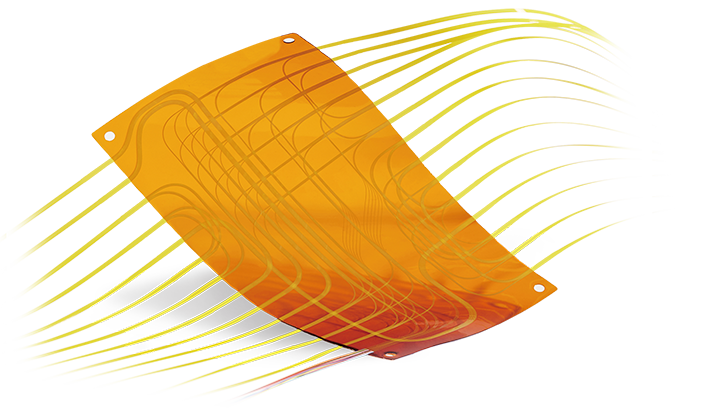 Fiber Optic Flex Circuit (FOFC)
Advanced Simulation & Optimization, High Positioning Accuracy, Flexible Customization, Rigorous Reliability Testing
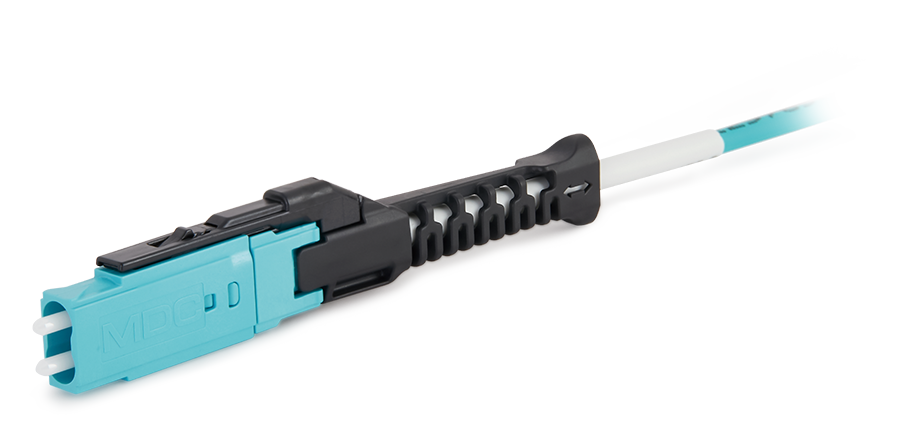 MDC Solution
US Conec's MDC connector is a Very Small Form Factor (VSFF) duplex optical connector, expertly designed for terminating single-mode and multimode fiber cables with diameters up to 2.0mm.
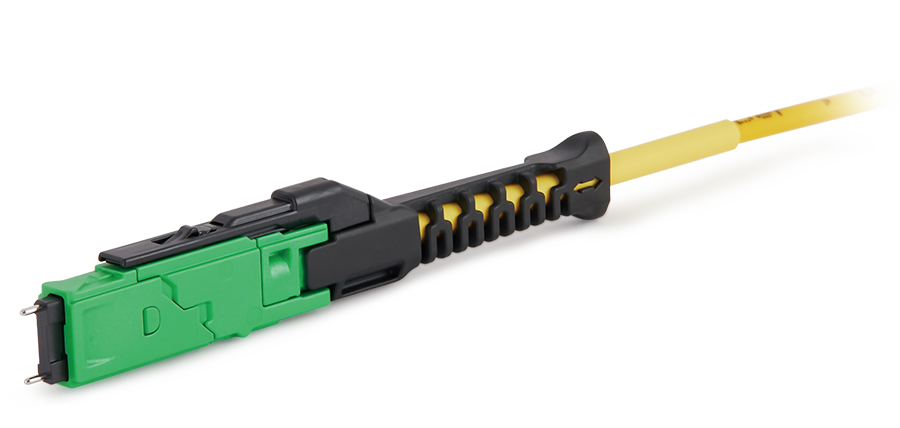 MMC Solution
Explore MMC cable and connector solutions for high-speed data centers, AI and HPC, including custom assemblies for 400G/800G network applications.